
Advanced Chelating Resin Heavy Metal Removal Solutions Provider: A Comparison of Functional Groups
Sep 28, 2026
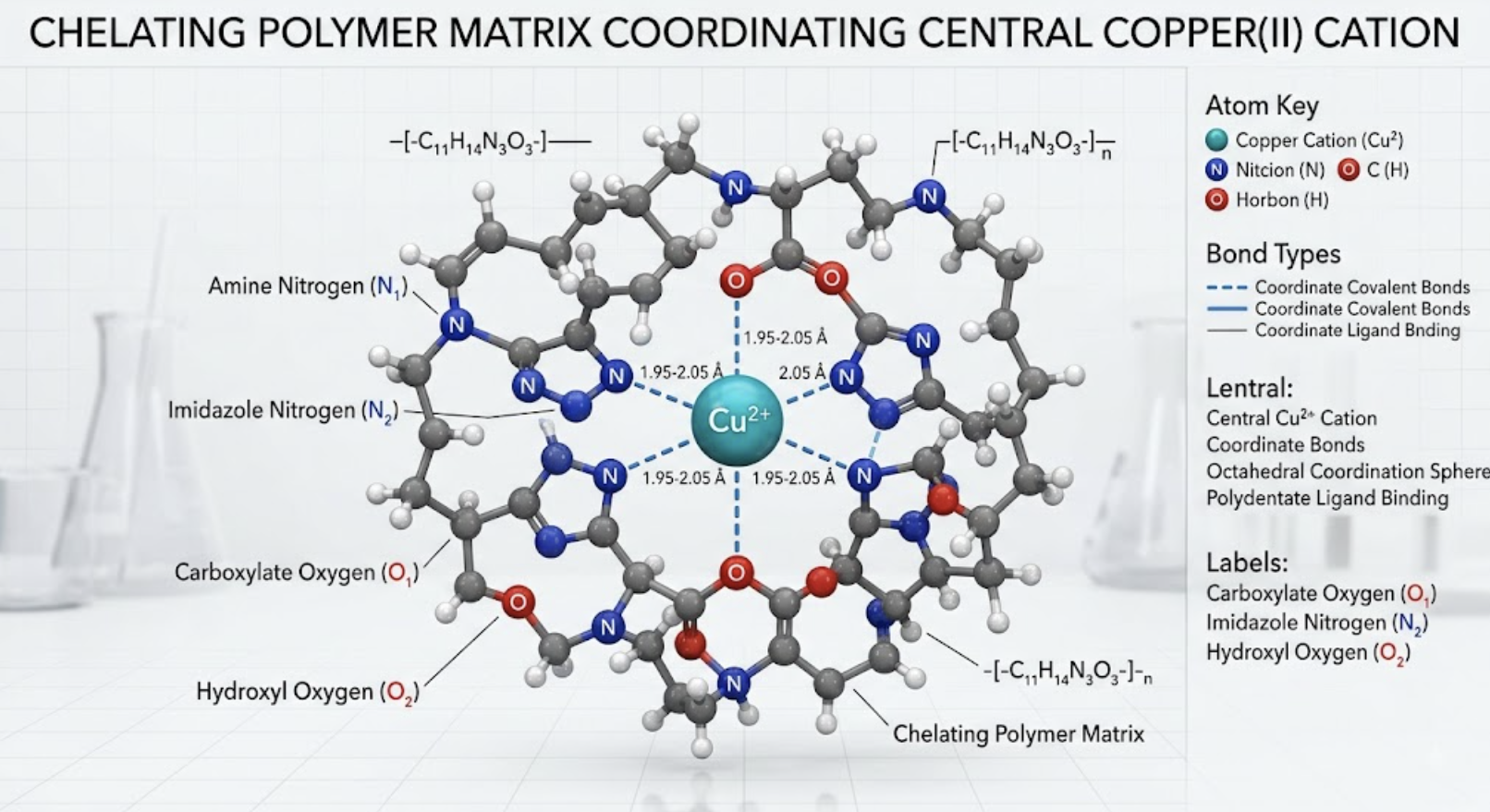
Xian, Shaanxi Sep 28, 2026 (Issuewire.com) - Industrial separation requirements in modern hydrometallurgy, electronics manufacturing, and wastewater management demand high precision. Standard ion exchange resins often struggle when target heavy metals exist alongside dense background concentrations of calcium, magnesium, or sodium. Selecting an experienced Advanced Chelating Resin Heavy Metal Removal Solutions Provider enables plant operators to deploy tailored polymeric ligands that solve these complex separation tasks. Unlike standard cation exchange media, chelating resins use specific organic functional groups anchored to a porous polymer matrix to form stable coordinate bonds with transition metal cations. Because different chemical ligands exhibit varying affinities for specific metals, understanding functional group chemistry becomes essential for process engineers. Matching the proper ligand structure to complex fluid matrices determines both separation efficiency and long-term operating costs.
Molecular Architecture: Ligand Coordination Mechanisms in Chelating Polymers
Conventional strong or weak acid cation resins bind metal ions primarily through unselective electrostatic attraction. In contrast, chelating polymers rely on coordination chemistry similar to complexing agents in analytical chemistry. Attached functional groups contain donor atoms, primarily nitrogen, oxygen, and sulfur, which possess unshared electron pairs. These donor atoms share electron density with vacant orbitals of transition metal ions, forming stable coordinate covalent bonds. Consequently, the resin binds target cations firmly while ignoring non-transition light metals.
The spatial arrangement of these donor atoms creates a ring-like coordination structure called a chelate ring. Five-membered or six-membered chelate rings exhibit exceptionally high thermodynamic stability. For example, when a divalent metal ion interacts with a chelating site, multiple donor atoms enclose the cation simultaneously. This multidentate binding mechanism creates a high binding energy that easily overcomes the hydration energy of the metal ion in aqueous solution.
Furthermore, the selectivity order of chelating resins closely follows the Irving-Williams stability series for transition metal complexes. Transition metals with higher electronegativity and smaller ionic radii form stronger coordination bonds with nitrogen and oxygen donor atoms. As a result, copper, nickel, zinc, and cobalt bind far more strongly than alkali or alkaline earth metals. This molecular mechanism allows chelating media to capture trace toxic heavy metals even when background salt levels are tens of thousands of times higher.
Comparative Chemistry: Matching Functional Group Profiles with Industrial Separation Targets
Process engineers select specific chelating resins based on the chemical identity of the target heavy metal and the pH of the feed stream. The most common commercial functional groups include iminodiacetic acid, aminophosphonic acid, bispicolylamine, and sulfur-bearing ligands. Each group offers distinct advantages, trade-offs, and optimal operating windows across various industrial process streams.
Iminodiacetic acid functional groups contain one nitrogen donor atom and two carboxyl oxygen donor atoms. This structure forms stable chelate rings with copper, nickel, cobalt, and lead in neutral to weakly acidic solutions. Because of its balanced binding capacity and straightforward acid elution kinetics, iminodiacetic resin serves as a versatile workhorse for general industrial wastewater polishing. However, its binding affinity decreases significantly in strongly acidic environments below pH 2.0.
In contrast, aminophosphonic acid functional groups feature phosphonic acid motifs alongside amine nitrogens. This configuration provides superior selectivity for divalent cations in the presence of high sodium chloride or sulfate backgrounds. Aminophosphonic media demonstrate exceptional affinity for lead, zinc, and copper, while also binding calcium effectively under specific alkaline conditions. Industrial facilities frequently deploy these resins in chlor-alkali brine purification and secondary effluent polishing.
When process streams exhibit extreme acidity or high background concentrations of dissolved iron, bispicolylamine functional groups provide a specialized solution. Featuring pyridine nitrogen donor atoms, bispicolylamine ligands maintain high copper and nickel selectivity even at pH values as low as 1.0. Standard iminodiacetic resins lose function under such acidic conditions, but bispicolylamine continues to bind copper preferentially over ferric iron. Applying advanced functional resin technology across complex process streams relies on matching these chemical affinities precisely to operational conditions.
Finally, sulfur-bearing functional groups, such as thiol, thiourea, and dithiocarbamate motifs, exhibit extreme selectivity for soft heavy metals. According to Hard-Soft Acid-Base theory, sulfur acts as a soft donor atom that forms virtually irreversible coordination bonds with soft metal cations like mercury, gold, silver, and platinum-group elements. Thiol-functionalized resins remove mercury down to sub-ppb concentrations without capturing hard cations like calcium, magnesium, or iron, making them ideal for specialized hazardous waste remediation.
Engineering Dynamics: Mechanical Stability, Regeneration Kinetics, and Operational Longevity
Selecting the correct functional group represents only the first step in successful system design. Industrial operations require polymeric media that endure severe physical and chemical stresses over thousands of operating hours. Resin beads undergo continuous hydraulic compaction inside large exchange columns, alongside osmotic swelling and shrinking during alternating exhaustion and regeneration cycles.
Macroporous polymer matrices provide the structural rigidity necessary to resist osmotic shock and physical attrition. Synthetic bead engineering controls pore size distribution, surface area, and crosslinking density. High crosslinking prevents structural breakdown, while controlled macroporosity ensures rapid intra-particle diffusion of heavy metal ions to active chelation sites. This combination maintains fast exchange kinetics and low column pressure drops during high-flow operating conditions.
Regeneration kinetics also vary significantly among functional group types. Weakly basic or neutral ligands require lower concentrations of mineral acid for stripping, which reduces ongoing chemical consumption and salt production. Conversely, ultra-selective sulfur ligands bind heavy metals so tightly that chemical elution requires specialized complexing agents. Process engineers must balance high single-pass removal efficiency against the operational cost and complexity of resin regeneration.
Furthermore, operational longevity depends on preventing organic fouling and oxidative degradation. Dissolved organic matter or strong oxidizing agents in wastewater can block resin pores or degrade active ligand structures over time. Implementing effective pretreatment steps, such as granular activated carbon filtration or media washing protocols, preserves functional site availability and extends total resin service life.
Tailored Synthesis to EPC Realization: Sunresin's Integrated Separation Platform
Translating functional group chemistry into reliable industrial operations requires robust manufacturing standards and system engineering expertise. Industry provider Sunresin (Sunresin New Materials Co. Ltd.) addresses these industrial requirements through precision polymer synthesis, advanced quality control, and comprehensive engineering support. Manufacturing proprietary SEPLITE® chelating resins under strict quality management systems ensures high batch-to-batch consistency, uniform bead size distribution, and predictable field performance.
Because real-world wastewater compositions rarely match ideal laboratory models, empirical validation remains crucial. Sunresin conducts comprehensive analytical testing, bench-scale column studies, and field-scale pilot trials to evaluate fluid behavior under actual operating parameters. These empirical evaluations allow technical teams to determine accurate breakthrough curves, optimize column bed depth, and select the precise functional group profile for specific customer applications.
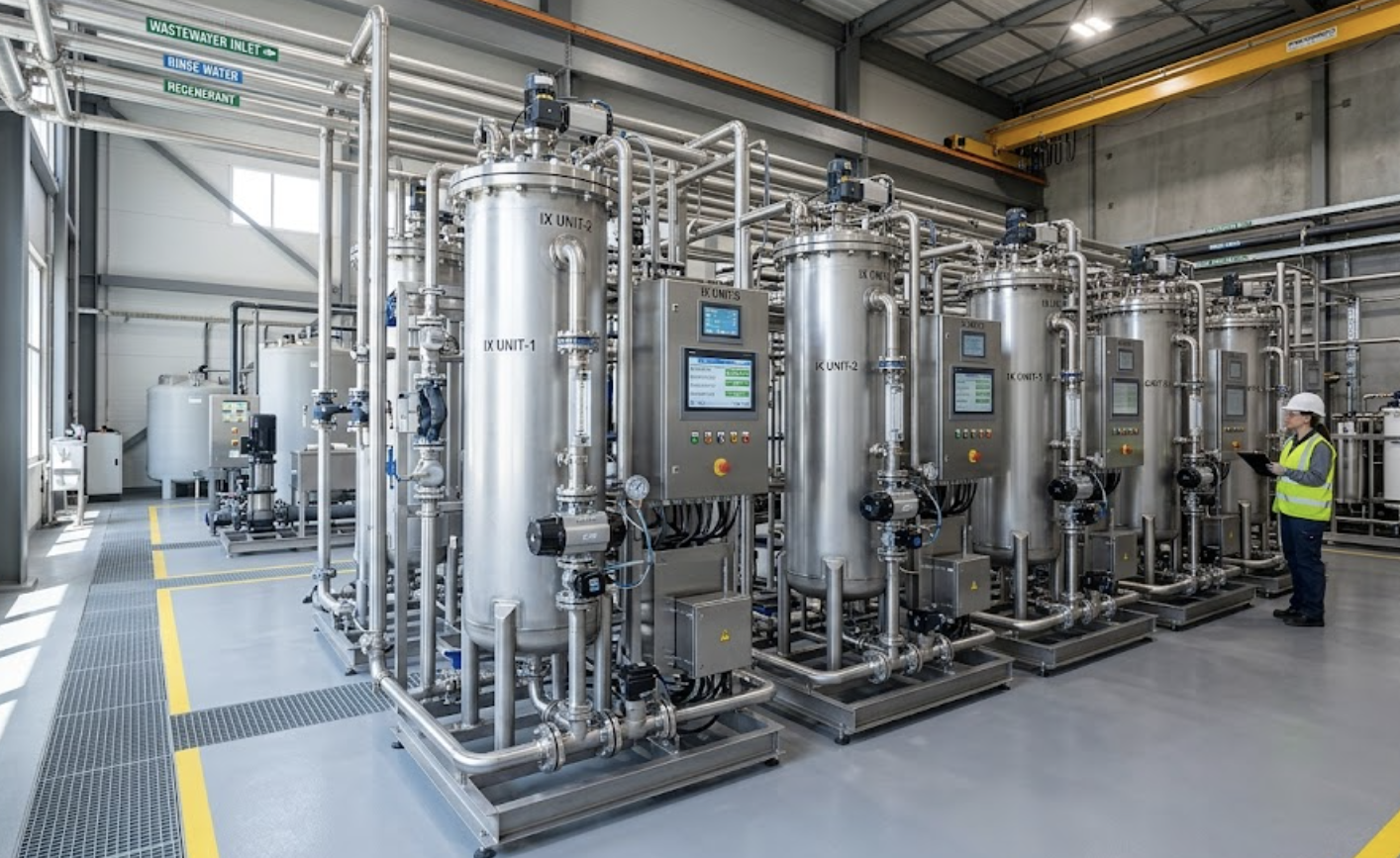
Beyond resin synthesis, Sunresin New Materials Co. Ltd. delivers fully integrated Engineering, Procurement, and Construction (EPC) solutions for automated separation systems. Designing custom equipment skids with automated valve manifolds, corrosion-resistant column materials, and real-time process monitoring tools ensures seamless system integration. By combining specialized chelating resins with turnkey system design, Sunresin helps industrial clients achieve strict environmental compliance, optimize chemical operating costs, and recover valuable metals efficiently.
For more information regarding advanced chelating resin solutions and industrial separation systems, visit https://www.seplite.com/.
Media Contact
Sunresin New Materials Co. Ltd.
+86 29-8669 1600
Sunresin Park, No. 135 Jinye Rd, Xi’an Hi-tech Industrial Development Zone, Shaanxi, China
Source :Sunresin New Materials Co. Ltd.
This article was originally published by IssueWire. Read the original article here.
More News
![aritcles[0].caption](https://images.perthnow.com.au/publication/C-23037039/78478a952f919a0548c8901db3b8dc1a4ce9f814-16x9-x0y0w1280h720.jpg)
Princess Kate launches new nature campaign to boost children’s wellbeing and development
The Princess of Wales is throwing her arms around young children battling in the ‘tech-driven, digital age’.

Mick Jagger among the stars at British Museum Ball
A roll call of red carpet stars have turned out for the annual British Museum Ball, donning outfits inspired by its autumn exhibitions.

Kristin Davis 'wasn’t eating any real food', but why?
Kristin Davis has recalled feeling self-conscious about her appearance during her Sex and the City days.

Fatherhood has given me more perspective, says Josh Hartnett
Movie star Josh Hartnett has reflected on his experience of fatherhood.

Miley Cyrus pays heartfelt tribute to Dolly Parton
Miley Cyrus has paid a glowing tribute to Dolly Parton, her godmother.

The music people hate says more than they think
Musical taste can make or break a first impression. But for one Queensland researcher, what we reject is just as fascinating as the songs we embrace.

Arts community seeks help during cost of living crisis
A national donation day run by the federal arts funding body is back for a second year but will Australians open their wallets during a cost of living crisis?

Taron Egerton explains how Rocketman changed his career
Taron Egerton has explained how Rocketman changed the course of his career.

Carly Rae Jepsen: Motherhood is fascinating
Carly Rae Jepsen has shared her thoughts on the challenges of motherhood.

BLACKPINK's Jennie is always 'collecting inspiration'
Music star Jennie has revealed that she draws inspiration from all sorts of sources.

Daisy Edgar-Jones 'always understood' Elinor Dashwood
Daisy Edgar-Jones has explained how she relates to Elinor Dashwood, her on-screen character.

Bridesmaids star Rebel Wilson felt like 'the most junior person on set'
Rebel Wilson has opened up about the experience of shooting Bridesmaids, the 2011 comedy film.
YOUR NEWS, OUR NETWORK.
Do you have Great News you want to tell the world?
Be it updates about your business or your community, you can make sure that it’s heard by submitting your story to our network reaching hundreds of news sites across 6 verticals.