
Testing XRecovery Capabilities Against a Top-Rated Damaged Partition Memory Card Recovery Tool Standard
Sep 29, 2026
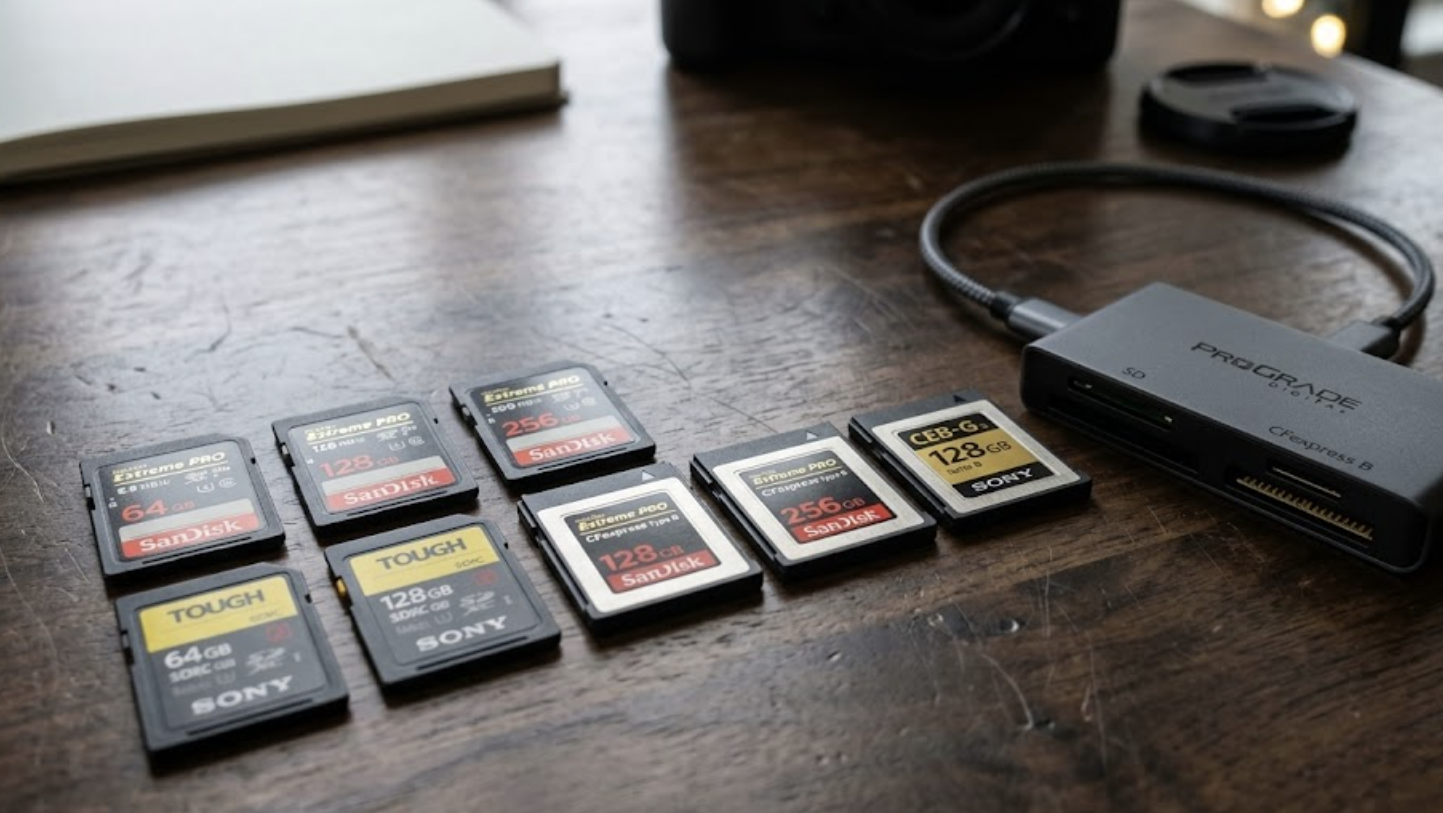
Hong Kong, Hong Kong S.A.R. Sep 29, 2026 (Issuewire.com) - Flash memory devices process complex data allocations daily across various digital cameras and mobile setups. However, abrupt disconnections, sudden power losses, or operating system errors can destabilize the internal storage logic instantly. When these structural traumas occur, the memory card partition table often degrades or shifts into a corrupted RAW file system. This logical collapse completely freezes standard user access, rendering valuable digital photographs and media assets invisible to the host machine. During these critical data emergencies, field technicians and media professionals require a robust Top-Rated Damaged Partition Memory Card Recovery Tool (https://www.xappset.com/xrecovery/) to evaluate the underlying sector blocks safely. Most traditional recovery utilities attempt to mount the broken partition using native operating system drivers. Unfortunately, this primitive method fails immediately if the root boot record contains corrupt binary instructions. A single damaged byte in the file allocation table can trick standard operating systems into declaring the device completely empty or permanently broken. Consequently, relying on a singular, rigid scan standard prevents users from discovering unindexed clusters that remain physically healthy on the flash storage medium. To resolve these complex issues, advanced data recovery engineering shifts the focus away from basic directory reading. Instead, modern specialized tools analyze raw data layers to rebuild broken structural pathways systematically. The Tri-Phasic Scan Sequence: Calibrating Quick, Deep, and Smart Modes for Time-Sensitive Triage Recovering files from a degraded partition demands a strategic deployment of distinct diagnostic algorithms. Rather than applying a single exhaustive scan right away, a tri-phasic sequence maximizes efficiency while preserving storage hardware health. The diagnostic process begins with a Quick Scan execution. This initial phase targets surviving allocation tables and shallow file directories, completing its analysis within a few seconds. By focusing strictly on remaining structural index lines, this step minimizes unnecessary drive wear and delivers immediate results for simple deletion issues. However, if severe partition trauma has wiped out the root index, the recovery routine must transition into a comprehensive Deep Scan. This second phase performs a meticulous, sequential bitstream carving process across every raw storage sector. Because a Deep Scan reads the entire physical volume block by block, it demands a significantly higher time investment from the user. For instance, a large-capacity storage card might require several hours to complete a full sector audit. Concurrently, a third layer becomes necessary when files fragment across non-contiguous spaces. To solve this problem, XRecovery deploys its proprietary Smart Scan optimization mode. This smart logic utilizes heuristic pattern matching to fill structural gaps and cross-reference orphaned fragments automatically. By alternating between these specialized modes in a logical order, operators achieve maximum file visibility without expanding baseline triage timelines unnecessarily. Horizontal Comparison: Diagnostic Versatility Versus Monolithic Industry Approaches Evaluating market options reveals a profound divergence in how application frameworks handle broken memory card structures. Top-rated competitor applications often rely on a monolithic scanning profile that applies the same rigid search pattern to every scenario. This inflexible design frequently fails when encountering fragmented allocation tables or mixed file systems on a single card. For instance, a competitor tool might stall entirely when encountering a bad block, leaving the user with an incomplete, corrupted file export list. In contrast, providing multiple specialized scanning routines allows advanced applications to navigate around physical and logical barriers easily. This versatility ensures that users can achieve high recovery success rate with XRecovery (https://www.xappset.com/xrecovery/help/achieve-high-recovery-success-rate-with-xrecovery/) even on heavily degraded media. The software adjusts its parsing method based on the real-time feedback from the storage controller. If a sector responds slowly, the engine temporarily alters its track to prevent system lockups. Furthermore, this dynamic adaptability allows the utility to successfully bypass bad storage blocks that typically halt mainstream data software. By dividing the search matrix into distinct tactical layers, the system prevents incomplete file reconstructions and broken media headers. As a result, individuals obtain highly accurate previews of their lost assets before initiating final data restoration steps. This multi-mode approach fundamentally elevates the recovery baseline, transforming previously unrecoverable sectors into accessible data pools. Maximizing Recovery Coefficients: How Algorithmic Layering Solves Complex Partition Corruptions Reassembling a fragmented digital mosaic requires a deep synthesis of file signature matching and directory tracking. When a partition breaks, the link between a file name and its actual content clusters vanishes. Therefore, algorithmic layering must reconstruct these severed relationships by analyzing raw file footprints directly. The advanced local processing framework engineered by XRecovery (Xcel Labs Limited) (https://www.xappset.com/about-us/) executes these complex calculations entirely within volatile memory. This design choice guarantees that the software never writes new data back to the damaged source device during scanning operations. By enforcing this non-destructive execution pipeline, the utility protects the integrity of the original media perfectly. Technicians can perform multiple successive diagnostic runs without risking secondary data degradation. In addition, the algorithmic layers cross-reference discovered file fragments against known header-footer templates for professional media formats. This Meticulous verification step ensures that restored images open smoothly without displaying annoying compression artifacts or gray blocks. The user interface displays a transparent validation framework, offering full-resolution previews of recovered items. This capability allows administrators to confirm the structural integrity of their photographs and documents prior to purchasing any commercial license. Consequently, this empirical validation instills absolute confidence in the system capability to handle catastrophic storage failures cleanly. Strategic Conclusion: Fostering Enterprise Partnerships Through Flexible Utility Integration Modern corporate environments place a premium on operational adaptability, data privacy, and predictable cost management. When digital media campaigns or engineering projects stall due to storage failure, organizations cannot afford prolonged downtime. Integrating multi-mode extraction capabilities directly into internal workflows allows technical teams to resolve these incidents locally. Furthermore, the desktop ecosystem managed by Xcel Labs Limited operates completely offline, eliminating external data transmission risks completely. This local security model prevents regulatory compliance violations, as sensitive corporate files never leave the physical workspace. To accommodate various organizational scales, the application offers highly flexible subscription models and tailored pricing structures. Commercial hardware centers, IT departments, and retail service operations can choose precise tiers that align with their active project volumes. This approach eliminates high upfront capital expenses while providing top-tier data resilience across entire technology fleets. By lowering deployment friction, the developer helps corporate partners maintain excellent service margins for their respective clients. Ultimately, choosing a utility built on authentic engineering performance transforms unexpected storage crises into manageable operational tasks. For technical professionals seeking detailed product integration specifications and secure setup downloads, comprehensive resources remain accessible through the primary developer hub at https://www.xappset.com/.

Source :Xcel Labs Limited
This article was originally published by IssueWire. Read the original article here.
More News
![aritcles[0].caption](https://images.perthnow.com.au/publication/C-23033794/17b75ddf3e0a67fc5dd9591b635c09dbbf3693b8-16x9-x0y0w1280h720.jpg)
Home is where the heart is for Sapphire City's girl
Succession planning and country pop songs might not go hand in hand, but an Australian singer has found inspiration in bidding farewell to her family's farm.

Musos battle pollies, big tech to protect their songs
The law says you can't use a song for political or commercial purposes without the permission of the author. But for artists, it's like playing whack-a-mole.

Young dancers to bring 'culture alive' at Opera House
An all-female dance ensemble is set to take centre stage at the Sydney Opera House, bringing cultural stories to life in their DanceRites debut.

Ratings success: why Australia has fallen back in love with MKR
From pigeon claws to melamine plates, Seven’s flagship cooking show has cooked up an epic ratings comeback, reclaiming its throne as Australia’s ultimate water-cooler TV.

What To Watch TV Reviews: Phony, Yaga, Telethon, Nobody Wants This and Aussie Shore
This week we’re gearing up for some wholesome fun with Telethon, peeping Yaga and Phony, checking back in with Nobody Wants This, and celebrating Aussie Shore’s return.

Anna Faris 'hurt' by showrunner Chuck Lorre's comments
"Didn't see that coming": Mom star Anna Faris has responded to critical remarks about her by the sitcom's creator Chuck Lorre in his memoir.

Hilary Swank addresses 'backlash' after announcing she's pregnant at 52
Hollywood actress Hilary Swank addressed the "backlash" over women having children later in life after announcing she's pregnant again at the age of 52.

Kim Kardashian feared 'life was over' after getting pregnant
Kim Kardashian feared her "life was over" when she got pregnant with daughter North just seven months into her relationship with Kanye West.

Michael Douglas claims Danny DeVito swallowed marijuana joints during police stop
Michael Douglas claims his pal Danny DeVito once swallowed "a few" marijuana joints to get the pair out of trouble after their car was pulled over by police.

Selena Gomez says Taylor Swift gives better marriage advice
Selena Gomez thinks Taylor Swift gives "better" marriage advice than she could so she hasn't offered any tips to her newlywed friend.

Daisy Edgar-Jones left 'deaf in one ear' after Twisters
Actress Daisy Edgar-Jones has confessed she's been left "slightly deaf" in one ear after filming tornado movie Twisters.

Steven Soderbergh steps in to help Matt Reeves finish The Batman Part II
Steven Soderbergh is stepping in to help complete filming on The Batman Part II after director Matt Reeves needed time out to address a "family matter".
YOUR NEWS, OUR NETWORK.
Do you have Great News you want to tell the world?
Be it updates about your business or your community, you can make sure that it’s heard by submitting your story to our network reaching hundreds of news sites across 6 verticals.